2026/06/21
 |
|

If you are experiencing recurring skin symptoms and suspect that metals in the oral cavity may be a contributing factor, please feel free to consult with us.
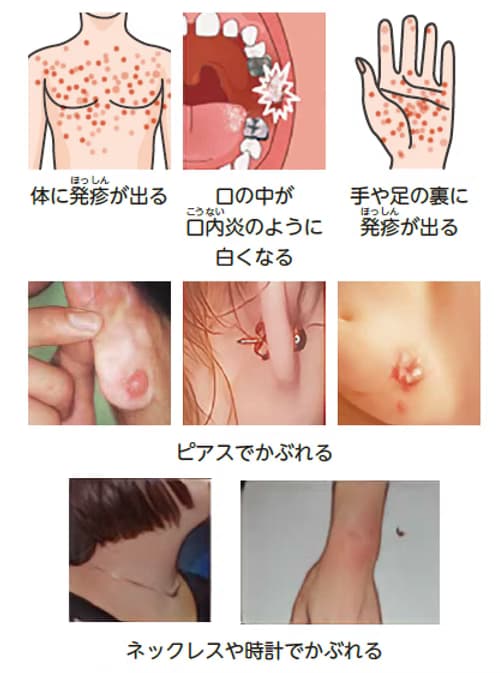
Metal allergy is an allergic reaction that occurs when the body comes into contact with certain metals and may cause symptoms such as itching of the skin (as shown in the image).
In recent years, the number of individuals with metal allergies has increased, and reactions to metals used in dental treatment are also becoming more common.
At Tokushima University Hospital, we offer a specialized clinic for patients with metal allergies related to dental materials.
Outpatient Clinic Brochure (PDF, Japanese only)

Pamphlet: Enjoying Accessories Safely (PDF, Japanese only)
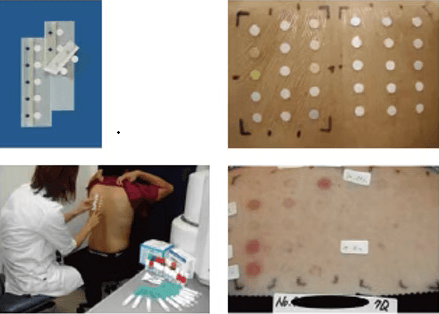
During the test, special adhesive patches containing small amounts of various metals are applied to the back and left in place for two days.
After the patches are removed, the skin reaction is evaluated over three follow-up visits. This helps determine whether you have an allergy to specific metals.
If the test confirms an allergy to a particular metal, and that metal is used in dental treatment in your oral cavity, removal of the material may be recommended depending on your condition. In such cases, we will provide information to your regular dentist and work in coordination to ensure appropriate treatment.
| Department | Mo | Tu | We | Th | Fr | Reception Hours |
|---|---|---|---|---|---|---|
| Advanced Clinical Care CenterDental Metal Allergy ClinicInitial Consultation Days | × | 〇 | × | 〇 | 〇 | 8:30 - 11:0013:00 - 15:00 |
* All four visits are required to complete the patch test.
* Patch testing is not available in July and August due to increased sweating.
Metal allergy occurs when metals that come into contact with the skin or oral mucosa dissolve into ions and bind with proteins in the body, forming new substances. These substances may be recognized by the body as foreign, triggering an allergic reaction. Metal allergies are broadly classified into contact dermatitis and systemic metal allergy.
Contact dermatitis, commonly referred to as a skin rash, occurs when the skin reacts to substances it comes into contact with, such as metal accessories (e.g., necklaces and earrings), rubber products, cosmetics, medications, or plants. Symptoms may include redness, itching, rashes, or blisters.
Metals such as nickel are also found in foods including chocolate, cocoa, legumes, spices, shellfish, and whole grains. In addition, many dental materials contain metals such as palladium, gold, and tin. These metals can be absorbed through the skin, mucosa, gastrointestinal tract, and respiratory tract. In patients with metal allergy, absorption of these metals may lead to dermatitis affecting the hands, feet, oral cavity, or the entire body. This condition is known as systemic metal dermatitis (systemic metal allergy).
We welcome individuals and organizations who are interested in our activities related to metal allergy and the safety of metal products.
Working in collaboration with healthcare professionals, researchers, industry, and public institutions, we aim to promote a safer environment in which consumers can confidently select and use metal products.
If you are interested in contributing to these efforts, we encourage you to consider joining us.
Learn more about our Research Group.